Foundations
Intermittent Fasting After Menopause
Intermittent fasting after menopause can be useful, but the priority shifts from cycle-syncing to protecting sleep, muscle, and metabolic health.
Educational content created by the FastingBestie team and maintained against the sources linked below. Research on cycle-synced fasting specifically is still emerging, so these guides combine direct evidence with broader fasting and menstrual-health literature. Read our editorial policy.
Intermittent fasting after menopause can be useful, but the goal changes. You are no longer trying to match your fasting window to a menstrual cycle. You are trying to build a routine that supports metabolic health, preserves muscle, and does not make sleep or quality of life worse.
That is a different problem, and it needs a different frame.
What changes after menopause
Menopause is defined once you have gone 12 consecutive months without a period. After menopause, estrogen levels are lower, and health priorities often shift toward:
- preserving bone and muscle
- maintaining insulin sensitivity
- supporting heart health
- managing sleep and hot flashes if symptoms continue
This is why a fasting plan that ignores protein, resistance training, and recovery is usually missing the point.
The best starting schedule after menopause
For many women, the most practical place to start is a 12 to 14 hour overnight fast.
That gives you structure without squeezing meals so tightly that protein intake drops or recovery suffers. Some women do well with a longer window, but the test should be simple:
Can you still eat enough protein, train well, sleep well, and feel normal?
If not, the window is too long.
What emerging fasting research suggests
Direct menopause-specific fasting research is still emerging, but it is starting to appear. A 2025 trial in menopausal women found that time-restricted eating combined with exercise improved symptoms and quality of life more than exercise alone.
That is encouraging, but it should still be read in context. The point is not that every postmenopausal woman should jump straight into 16:8. The point is that a structured eating window may be helpful when it is paired with the rest of the basics.
FastingBestie app
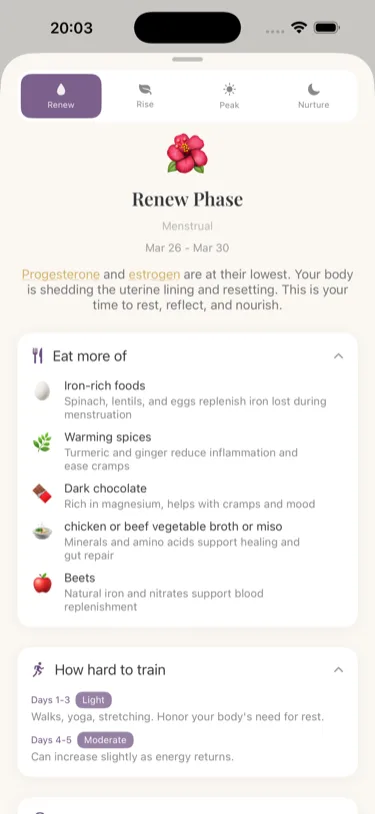
Fasting that adapts to your cycle
The app works out your cycle phase automatically and tells you what to eat, when to fast, and when to ease off, so your plan adjusts itself every week.

What matters more than the fasting window
After menopause, the non-negotiables are usually:
- resistance training
- protein spread across the day
- enough total food
- sleep support
- realistic meal timing
If fasting makes those harder, it is costing more than it is giving.
A good postmenopausal fasting plan is not austere
One reason intermittent fasting can still work well after menopause is that it can reduce constant grazing and create a steadier rhythm. But the useful version is rarely the harsh version.
In practice, many women do well with:
- an earlier dinner
- a consistent breakfast time
- an eating window that still fits social life
- no habit of under-eating all day and overeating at night
If you want a broader overview of how the method changes across life stages, start in the guides hub and then read our practical guide to intermittent fasting for women. Today, FastingBestie’s in-app guidance is still cycle-phase based, so dedicated menopause-specific support is not live yet. That broader support is planned. If you want to understand the current product, the features page shows the existing approach.
The practical takeaway
Intermittent fasting after menopause is not about chasing the most impressive protocol. It is about building a routine that helps you feel and function better over time.
Short enough to be sustainable. Long enough to create structure. Flexible enough to support the rest of your health.
Frequently asked
- Can postmenopausal women do intermittent fasting?
- Yes, many can. The main difference is that the plan is no longer built around a menstrual cycle. Instead, it should be built around sleep, appetite, training, medications, and how well you recover.
- What is the best fasting schedule after menopause?
- A moderate overnight fast, often 12 to 14 hours, is a sensible starting point. Some women do well with 14:10 or 16:8, but only if it does not crowd out protein, recovery, or quality of life.
- Will fasting help with menopause belly fat?
- It may help some women by improving meal structure and supporting energy balance, but it is not a targeted fix. Strength training, protein intake, sleep, and total lifestyle still matter more than the fasting headline.
- Do I still need to cycle-sync after menopause?
- No, not in the menstrual-cycle sense. After menopause, the plan should be adjusted to symptoms, stress, training, and medical context rather than to cycle phases.
References and further reading
- Menopause (NICHD)
- The Menopause Years (ACOG)
- Hormone Therapy for Menopause (ACOG)
- Time-Restricted Eating Combined with Exercise Reduces Menopausal Symptoms and Improves Quality of Life More than Exercise Alone in Menopausal Women
- Intermittent and periodic fasting, longevity and disease (Longo et al., Nature Aging review)
FastingBestie app
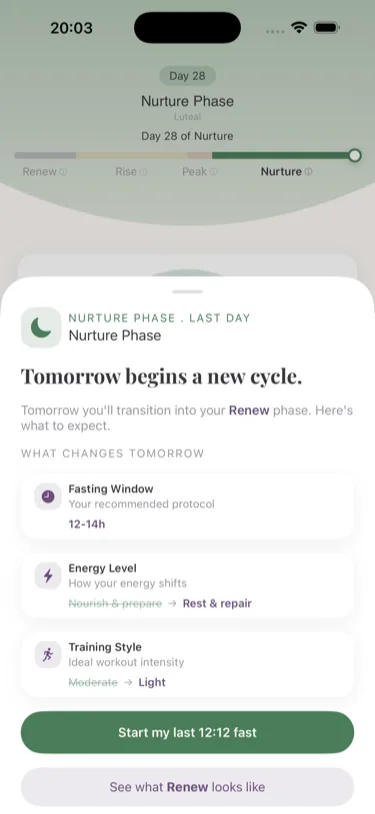
Skip the guesswork
FastingBestie reads your cycle phase and adjusts your fasting window, meals, and training as your hormones shift, so you always know today’s plan without rebuilding it.
FastingBestie provides evidence-informed guidance, not a substitute for professional medical advice. If you're pregnant, breastfeeding, have a history of disordered eating, or are managing a medical condition, talk to your doctor before starting or changing a fasting routine.