Foundations
Intermittent Fasting in Perimenopause
Intermittent fasting in perimenopause can help, but flexible windows usually beat rigid fasting when sleep and cycle timing are changing.
Educational content created by the FastingBestie team and maintained against the sources linked below. Research on cycle-synced fasting specifically is still emerging, so these guides combine direct evidence with broader fasting and menstrual-health literature. Read our editorial policy.
Intermittent fasting in perimenopause can work, but most women do better with a flexible and moderate version of it. When sleep, cycle timing, and symptoms are all in flux, a rigid fasting rule often becomes one more stressor instead of a helpful structure. It builds on the same principles as intermittent fasting for women, adapted for a stage when your cycle is harder to predict.
That is the main shift to understand: perimenopause is not just “the same plan, but older.” For a fasting book that dedicates chapters to perimenopause and menopause specifically, our review of Megan Ramos’s Essential Guide to Intermittent Fasting for Women is the one to read.
Why fasting feels different in perimenopause
Perimenopause is the transition leading up to menopause. Estrogen and progesterone begin to fluctuate more unpredictably, periods may become irregular, and symptoms such as hot flashes, night sweats, and sleep disruption become more common.
Those changes matter because fasting tolerance depends heavily on sleep, recovery, and stress load. If those are getting less stable, the smartest fasting plan usually gets less rigid too.
What the evidence says
Direct fasting research specifically in perimenopause is still limited. That means any practical guidance here is partly drawn from three places:
- what we know about perimenopausal physiology
- what we know about intermittent fasting more broadly
- what women commonly tolerate in real life
That is why conservative guidance is the better guidance.
The best fasting pattern for many women in perimenopause
Start here:
- 12 to 14 hours overnight
- regular meal timing
- enough protein at each meal
- no habit of using caffeine to skip food all morning
If you sleep well and feel stable, you may be able to extend occasionally. But the default should usually feel easy.
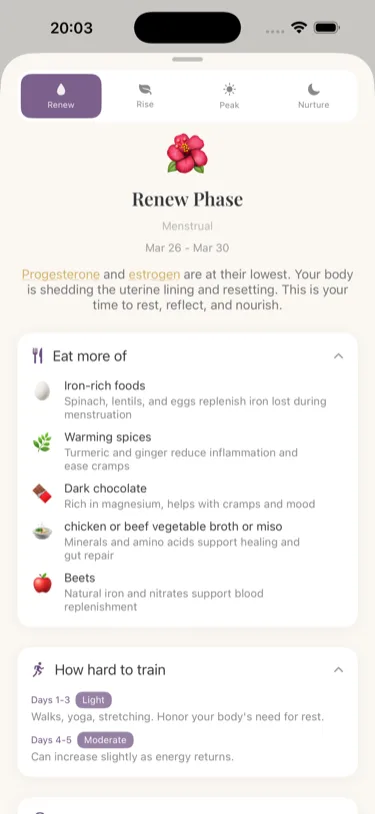
FastingBestie app
Fasting that adapts to your cycle
The app works out your cycle phase automatically and tells you what to eat, when to fast, and when to ease off, so your plan adjusts itself every week.

What to prioritize more than the fasting window
Perimenopause tends to reward basics:
- resistance training
- protein
- consistent sleep timing
- meals that do not trigger late-night rebound hunger
- stress management
This is one reason women sometimes get more benefit from fixing dinner and sleep than from stretching the morning fast.
Can you still cycle-sync in perimenopause?
Sometimes yes. Sometimes not neatly.
If your cycle still has recognizable phases, you can absolutely use that information. If it does not, shift toward symptom-led fasting instead. That means shorter windows when sleep is poor, bleeding is heavy, or cravings are intense, and slightly longer windows only when you feel steady.
If you need the full phase framework, our main guide to cycle-synced fasting is still the place to start. If you want the broader library, go to all guides.
When to pull back
In perimenopause, pull back if fasting is making:
- sleep worse
- hot flashes feel harder to handle
- your mood flatter or more irritable
- exercise recovery worse
- food thoughts more obsessive
That is not a sign you are weak. It is a sign the current routine is not matching the current season.
The practical takeaway
Intermittent fasting in perimenopause is usually best when it acts like a framework, not a challenge. Use it to create rhythm, not to see how long you can go without breakfast.
Today, FastingBestie’s in-app guidance is still centered on menstrual-cycle phase changes. Dedicated perimenopause-specific support is not live in the app yet, though it is planned. Until that is available, this guide is the better reference for adapting the method when your cycle and symptoms get less predictable. You can still see the current product approach on the features page.
Frequently asked
- Is intermittent fasting safe in perimenopause?
- For many women, yes, especially with modest windows and enough food. The bigger issue is often tolerance rather than safety: sleep, hot flashes, and irregular cycles can make rigid fasting feel worse than it looks on paper.
- What fasting schedule works best in perimenopause?
- Many women do best with a 12 to 14 hour overnight fast as the foundation, with occasional longer windows only when sleep, appetite, and stress are in a good place.
- Should I cycle-sync fasting in perimenopause?
- As much as your cycle still gives you useful signals, yes. But many women need to rely more on symptoms than exact dates because hormone swings become less predictable.
- Do I need hormone testing before trying fasting in perimenopause?
- Usually no. ACOG notes that perimenopause is often identified by age, symptoms, and menstrual changes rather than routine hormone testing.
References and further reading
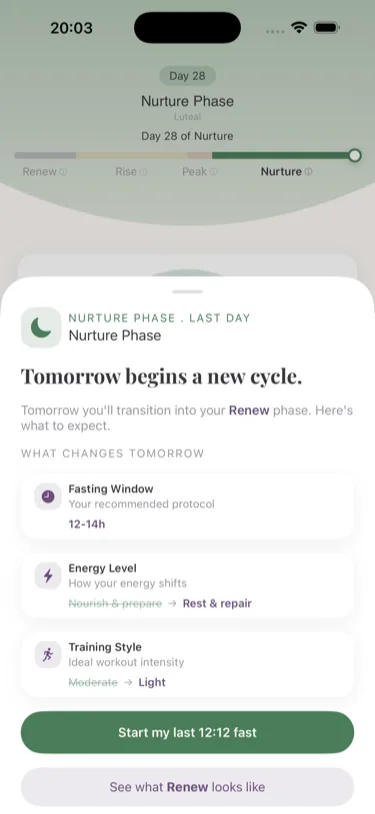
FastingBestie app
Skip the guesswork
FastingBestie reads your cycle phase and adjusts your fasting window, meals, and training as your hormones shift, so you always know today’s plan without rebuilding it.
FastingBestie provides evidence-informed guidance, not a substitute for professional medical advice. If you're pregnant, breastfeeding, have a history of disordered eating, or are managing a medical condition, talk to your doctor before starting or changing a fasting routine.