Foundations
Can You Fast With an Irregular Cycle?
Yes, you can fast with an irregular cycle, but the safest approach is gentler, symptom-led, and more cautious than calendar-based fasting plans.
Educational content created by the FastingBestie team and maintained against the sources linked below. Research on cycle-synced fasting specifically is still emerging, so these guides combine direct evidence with broader fasting and menstrual-health literature. Read our editorial policy.
Yes, you can fast with an irregular cycle, but it usually calls for a gentler and more symptom-led approach than women with very predictable cycles need. The safest version relies on modest fasting, honest tracking, and a low threshold for easing off if your cycle becomes less stable, rather than on hitting calendar targets.
That distinction matters, because “irregular cycle” is a description, not a diagnosis. The same phrase can point to very different underlying causes, and a few of them deserve medical attention rather than a fasting plan.
What counts as an irregular cycle?
An irregular cycle can mean several different things:
- cycles that are consistently shorter or longer than a typical range of 24 to 38 days
- a gap between periods that changes a lot from month to month
- periods that arrive more than 35 to 38 days apart
- missed periods for several months
- bleeding that becomes unusually heavy or prolonged
Those patterns can have very different reasons behind them. ACOG and NICHD describe causes that include PCOS, perimenopause, thyroid problems, high stress, heavy exercise, eating disorders, certain medications, and other medical conditions. Some of those causes are harmless and self-correcting. Others need treatment. A fasting routine cannot tell the difference between them, which is why the starting point is caution rather than ambition.
Why aggressive fasting can muddy the picture
If your cycle is already irregular, a hard fasting routine can make it harder to read what is going on. Aggressive fasting adds another stressor on top of an already unstable hormonal picture. Long fasts, under-eating, and heavy training combined can push sleep, recovery, and cycle timing further off course, and research on fasting in women describes it as a double-edged influence on reproductive hormones rather than a neutral habit.
Fasting is still on the table. The takeaway is to keep the dose small and calm, and to treat any change in your cycle after you start fasting as information worth acting on.
The best fasting approach with an irregular cycle
Start at the gentle end:
- 12 to 13 hours overnight
- regular first and last meals, at roughly consistent times
- enough protein at each meal
- no habit of skipping food to make up for a messy week
Then use symptoms, not dates, to adjust:
- bleeding or low energy: shorten the fast
- rising energy and a lighter appetite: you may be able to extend slightly
- cravings, bloating, worse sleep, or irritability: shorten again
If you want the full framework, our cycle-synced fasting guide still applies. You use body signals to place yourself in the pattern instead of counting days.
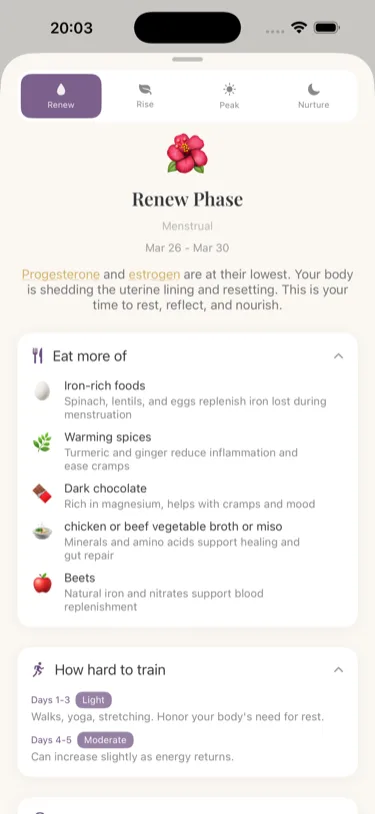
FastingBestie app
Fasting that adapts to your cycle
The app works out your cycle phase automatically and tells you what to eat, when to fast, and when to ease off, so your plan adjusts itself every week.

How to track when the calendar does not work
When dates are unreliable, the most useful thing you can do is track signals instead. For a couple of months, keep a simple note of:
- energy through the day
- appetite and cravings
- sleep quality
- mood and stress tolerance
- any bleeding or spotting
- how training feels
Over time, patterns usually appear even in cycles that look chaotic on a calendar. You might find that a stretch of rising energy and steadier appetite tends to come before a harder, hungrier stretch. That gives you something to fast around. The aim is to recognise which kind of week you are in and match the fasting window to it, not to predict an exact day.
When irregular cycles need medical input
Fasting should stop being the main topic, and a doctor should become the priority, if:
- your period disappears for several months
- bleeding is very heavy, or lasts much longer than usual
- your cycle changed sharply with no obvious explanation
- you have new pelvic pain
- you bleed after menopause
In those situations, tightening the routine is the wrong move. Get assessed. Irregular or absent periods can be the first visible sign of something that needs treatment, and no fasting schedule is a substitute for that.
Can fasting still be useful?
For many women, yes. A light overnight fast can create rhythm, reduce chaotic snacking, and make meals more predictable. That structure can be especially helpful when the cycle itself feels unpredictable, because it gives you one stable thing to hold while other things move around.
It helps to be clear about what success looks like. The goal is a calmer routine, steadier energy, and clearer signals from your body, not proof that you can still hold a 16:8 window. Judged that way, a shorter fast that leaves you feeling better is the routine that is working.
FastingBestie and irregular cycles
The FastingBestie method still works here. It just leans less on precise dates and more on trends in bleeding, symptoms, and energy, and the guidance is built to be practical rather than punitive. You can see that approach on the features page or browse all guides.
If your cycle is irregular, gentler is almost always smarter.
Frequently asked
- Can you do intermittent fasting with an irregular cycle?
- Yes, but it is usually smartest to stay conservative. A light overnight fast and symptom-led adjustments tend to work better than a rigid 16:8 or longer routine.
- Can fasting cause irregular periods?
- It can in some women, especially if the fasting routine is aggressive or combined with under-eating, high stress, or heavy training. If your cycle changes after starting fasting, that is a signal to shorten the window or stop.
- How do I cycle-sync if my cycle is irregular?
- Use your symptoms as your guide. Energy, appetite, sleep quality, cravings, bleeding, and workout tolerance often tell you more than a calendar when timing is unpredictable.
- When should I see a doctor about irregular bleeding?
- If your periods are consistently very far apart, suddenly very different, extremely heavy, absent for months, or if you bleed after menopause, get medical advice. Those situations need evaluation rather than self-experimentation.
References and further reading
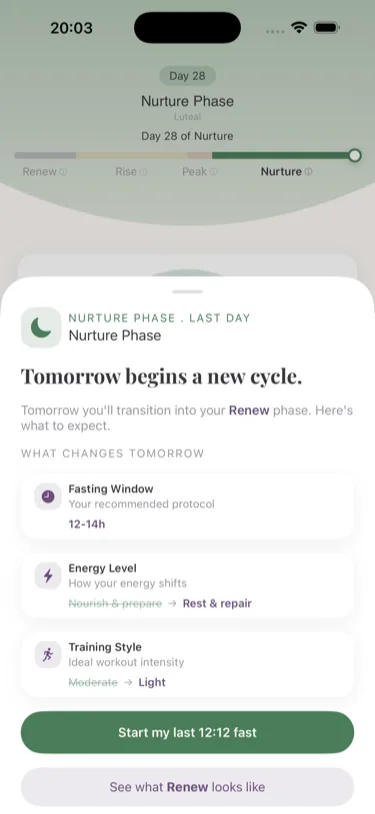
FastingBestie app
Skip the guesswork
FastingBestie reads your cycle phase and adjusts your fasting window, meals, and training as your hormones shift, so you always know today’s plan without rebuilding it.
FastingBestie provides evidence-informed guidance, not a substitute for professional medical advice. If you're pregnant, breastfeeding, have a history of disordered eating, or are managing a medical condition, talk to your doctor before starting or changing a fasting routine.