Ovulatory phase
Fasting During Ovulation
Fasting during ovulation can work well, but most women do best with flexibility rather than a rigid long fast. Here's how to handle the peak-energy window.
Educational content created by the FastingBestie team and maintained against the sources linked below. Research on cycle-synced fasting specifically is still emerging, so these guides combine direct evidence with broader fasting and menstrual-health literature. Read our editorial policy.
Fasting during ovulation is usually fine for most women, but it tends to work best as a flexible routine rather than a rigid long fast. Ovulation is a short, high-energy stretch in the middle of your cycle, and the smartest move is usually to keep some structure without letting the clock run your whole week.
If the follicular phase is where longer fasting often feels easiest, ovulation is where life tends to get busier. Energy is high, training often feels good, and social plans cluster around this part of the month. A fasting window that ignores all of that is the one most likely to be abandoned.
Why ovulation feels different
Ovulation is the release of an egg from the ovary, and it sits roughly in the middle of a typical cycle. In the day or two beforehand, estrogen reaches its highest point of the month, and a surge of luteinising hormone triggers the release. There is also a small, brief rise in testosterone.
Many women notice the effects of that hormonal peak:
- higher energy and motivation
- a brighter mood and more sociability
- more drive to train hard
- more interest in being out in the world than in managing a precise eating window
The ovulatory window itself is short. The egg is only viable for about a day, and the phase as a whole usually lasts a few days rather than a full week. That is why the best ovulation strategy is controlled flexibility rather than a fixed rule you try to hold for seven days straight.
The best fasting window during ovulation
For most women, 13 to 15 hours is the sweet spot.
That range gives you a stable routine while still leaving room for:
- breakfast after an early workout
- lunch with other people
- a later dinner once or twice in the week
Forcing a strict 16:8 every ovulation week is usually unnecessary. If you are newer to fasting, stay at the shorter end of that range and treat the window as a default you can move by an hour in either direction. If you have been fasting comfortably for months and the rest of life is calm, the longer end is fine. The aim is a habit that survives a busy week, not a fasting record.
What to eat around ovulation
Ovulation is not the week to under-eat. Appetite can swing from day to day, and training load is often higher, so the eating window needs to do real work.
A few priorities help:
- protein at every meal, to support recovery from harder training
- enough carbohydrate to fuel the workouts you actually do
- whole foods that keep energy steady through the day
If you train hard and then eat a small, low-carbohydrate dinner, the next morning’s fast will feel worse than the fasting window itself deserves. Feed the work you are doing, and the fast becomes much easier to hold.
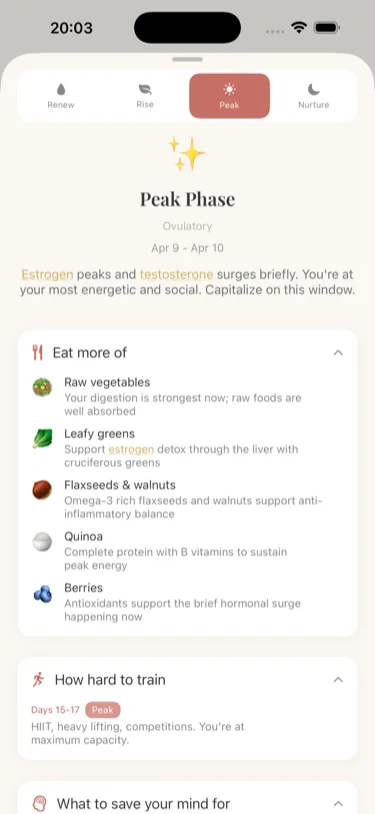
FastingBestie app
Fasting that adapts to your cycle
The app works out your cycle phase automatically and tells you what to eat, when to fast, and when to ease off, so your plan adjusts itself every week.

Hydration matters more here than most people realise
Ovulation often comes with more intense training, more movement, and a slightly higher body temperature once the egg is released. All of that raises how much fluid and how many electrolytes you need.
If you are fasting through the morning, keep drinking water, and add electrolytes if you train fasted or sweat heavily. A surprising amount of what feels like a bad fast in this phase is really poor hydration stacked on top of a busy day.
Train hard if you want, but recover honestly
Ovulation can be a good time for intense workouts. Many women feel strong here, and reviews of exercise across the menstrual cycle suggest performance can shift with cycle phase, though the evidence is mixed and varies a lot between individuals.
One caution applies: do not pair hard training with long fasting by default. If you are lifting heavy, doing intervals, or training for long durations, the quality of your recovery matters more than the neatness of your fasting window. A shorter eating gap that lets you refuel properly beats a longer one that leaves you under-recovered.
What to do if appetite changes quickly
Ovulation is brief. Some women barely notice it. Others feel excellent for two days and then become noticeably hungrier or more emotionally raw as they move into the luteal phase.
That shift is your signal to stop treating the ovulation window as a permanent rule. When the phase changes, the routine should change with it, usually toward a shorter, gentler fast. Catching that transition early is far easier than trying to rescue a luteal week that has already gone sideways.
To see how that transition works, read our cycle-synced fasting guide or browse the full guides hub.
The practical takeaway
Fasting during ovulation works best when it stays light on drama:
- keep the window moderate, around 13 to 15 hours
- drink enough, and replace electrolytes if you train hard
- eat to support performance instead of restricting
- stay socially normal and let plans move the window
If you want the app to handle those shifts for you, FastingBestie does that automatically.
Frequently asked
- Can you fast during ovulation?
- Yes, many women can. Ovulation is often a strong phase, but the best approach is usually flexible rather than rigid because training, appetite, and social demands can all be higher.
- Is 16:8 good during ovulation?
- Sometimes, but it is not automatically the best fit. Many women feel better keeping the window closer to 13 to 15 hours unless everything else in life is calm and recovery is solid.
- Why do I feel hungrier around ovulation even if energy is high?
- High energy does not always mean low appetite. Training load, social eating, and the short-lived hormonal peak in this phase can all change what feels easy from day to day.
- What if I do not know exactly when I ovulate?
- Use the cues you have. A brief high-energy phase between the follicular rise and the luteal slowdown often gives you enough information to adjust your fasting window.
- What should I eat around ovulation while fasting?
- Ovulation is not the week to under-eat. Prioritise protein at every meal and enough carbohydrate to fuel the training you actually do. Appetite can swing from day to day in this phase, so let it guide portion size rather than forcing a fixed amount.
References and further reading
- The Menstrual Cycle: Menstruation, Ovulation, and How Pregnancy Occurs (ACOG)
- Menstruation and Menstrual Problems (NICHD)
- Intermittent Fasting in Female Reproduction: A Double-Edged Sword (Yang et al., Nutrition Reviews)
- Exercise performance at different phases of the menstrual cycle (Wen et al., review)
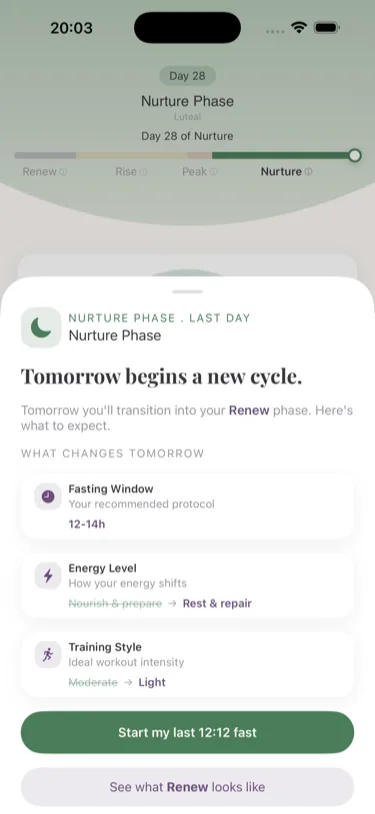
FastingBestie app
Skip the guesswork
FastingBestie reads your cycle phase and adjusts your fasting window, meals, and training as your hormones shift, so you always know today’s plan without rebuilding it.
FastingBestie provides evidence-informed guidance, not a substitute for professional medical advice. If you're pregnant, breastfeeding, have a history of disordered eating, or are managing a medical condition, talk to your doctor before starting or changing a fasting routine.