Luteal phase
Fasting During the Luteal Phase
Fasting during the luteal phase usually works better with shorter windows, earlier meals, and more food than generic fasting plans recommend.
Educational content created by the FastingBestie team and maintained against the sources linked below. Research on cycle-synced fasting specifically is still emerging, so these guides combine direct evidence with broader fasting and menstrual-health literature. Read our editorial policy.
Fasting during the luteal phase usually works best when you shorten the window instead of trying to power through it. For most women, 12 to 14 hours is more productive here than trying to force the same long fast that felt easy earlier in the cycle.
This is the phase where a lot of women decide fasting is not for them. More often, the problem is not fasting itself. The problem is using the wrong dose at the wrong time.
Why the luteal phase changes the rules
The luteal phase starts after ovulation and ends when your period begins. Progesterone rises, and many women notice a familiar pattern:
- appetite climbs
- cravings get louder
- sleep gets lighter
- body temperature rises
- patience for discomfort drops
That is not a willpower issue. It is a physiology issue.
The best fasting window for the luteal phase
Most women do best at 12 to 14 hours.
That usually looks like:
- finishing dinner earlier
- eating breakfast at a normal time
- stopping the habit of stretching the morning just because you “can”
The luteal phase rewards consistency more than intensity.
What often goes wrong
The usual mistake is trying to keep the same 16:8 or longer routine from the follicular phase. Then the late luteal week arrives and everything gets harder at once:
- you are hungrier
- your sleep slips
- workouts feel worse
- night eating becomes more tempting
That does not mean you failed the plan. It means the plan did not adapt.
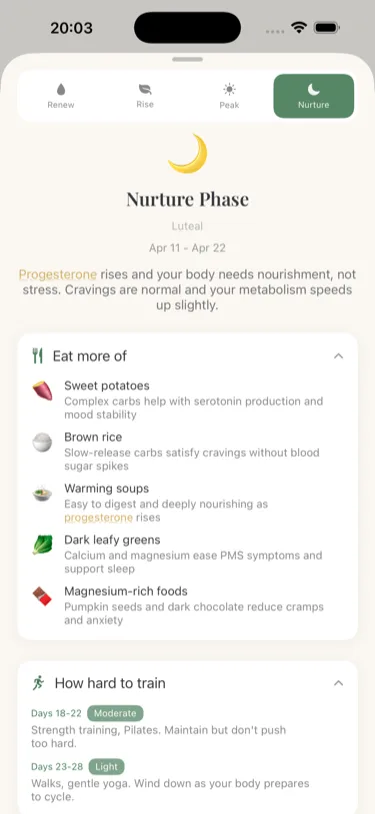
FastingBestie app
Fasting that adapts to your cycle
The app works out your cycle phase automatically and tells you what to eat, when to fast, and when to ease off, so your plan adjusts itself every week.

Food matters more in this phase
In the luteal phase, the eating side of the equation matters even more than the fasting side.
Aim for:
- protein at every meal
- steady complex carbs like oats, rice, potatoes, fruit, and beans
- magnesium-rich foods such as pumpkin seeds, dark chocolate, leafy greens, and legumes
- satisfying dinners instead of tiny dinners followed by late-night scavenging
This is also the phase where overly clean or overly restrictive eating often backfires.
Training should usually soften too
Many women do better with steady strength work, walking, Pilates, or moderate cardio in the luteal phase. Some still perform well. Many do not.
The useful question is not “Can I still push?” It is “Does pushing improve the week, or does it make the next three days worse?”
How to know you shortened the window enough
You got it right if:
- hunger feels manageable
- sleep is not getting worse
- you are not raiding the pantry at 9pm
- your mood is steadier
- the fast feels ordinary, not dramatic
If you want the deeper cycle context, go back to the main guide. If you want the broader library, start at all guides. If you want the product version, FastingBestie handles the phase change automatically.
The short version
The luteal phase is not the time to prove you can do hard things. It is the time to set your routine up so the hard things are unnecessary.
Frequently asked
- Can you fast during the luteal phase?
- Yes, but most women do better with a shorter window. A 12 to 14 hour overnight fast is often more sustainable than trying to push a long fast when appetite and recovery needs are higher.
- Why is fasting harder in the luteal phase?
- Progesterone rises in the luteal phase, and many women notice more hunger, worse sleep, lower stress tolerance, and a bigger need for carbohydrates. The same fast that felt easy in week two can feel much harder here.
- Should I stop 16:8 before my period?
- Many women feel better doing exactly that. Shortening the fast before the late luteal week gets rough often prevents the cycle of cravings, poor sleep, and rebound eating.
- What should I eat in the luteal phase if I am still fasting?
- Focus on steady protein, magnesium-rich foods, and enough complex carbs to feel calm and recovered. This is not the best week for under-eating or low-carb experiments.
References and further reading
- Intermittent Fasting in Female Reproduction: A Double-Edged Sword (Yang et al., Nutrition Reviews)
- Endocrine and chronobiological effects of fasting in women (Berga et al.)
- Exercise performance at different phases of the menstrual cycle (Wen et al., review)
- The Menstrual Cycle: Menstruation, Ovulation, and How Pregnancy Occurs (ACOG)
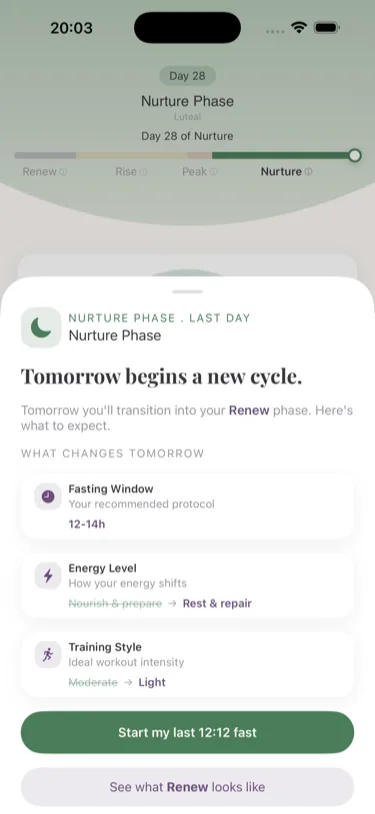
FastingBestie app
Skip the guesswork
FastingBestie reads your cycle phase and adjusts your fasting window, meals, and training as your hormones shift, so you always know today’s plan without rebuilding it.
FastingBestie provides evidence-informed guidance, not a substitute for professional medical advice. If you're pregnant, breastfeeding, have a history of disordered eating, or are managing a medical condition, talk to your doctor before starting or changing a fasting routine.